
The shifting sands of the low-cost housing landscape in South Africa reflect a deep-seated transformation within the sector, driven by the twin pressures of economic hardship and evolving policy landscapes. For many South Africans, the quest for affordable housing is not just a desire but a pressing need, amidst a backdrop of financial strain and uncertainties. This changing scenario is not merely about bricks and mortar; it's about innovative building techniques, sustainability, and creating communities that uplift and support their inhabitants.
Delving into this evolving sphere, it becomes clear that the journey towards affordable housing is fraught with both challenges and opportunities. The introduction of groundbreaking construction methods, a push towards greener living spaces, and a focus on fostering community cohesion are reshaping the way affordable housing is perceived and realised in South Africa. As we navigate through these changes, understanding the forces at play offers valuable insights into the complex, yet hopeful, landscape of low-cost housing in the country.
Key Takeaways
- Rising construction costs and limited grant funding are driving the need for innovative, cost-effective housing solutions.
- Policy shifts towards integrated human settlements and sustainable practices are reshaping affordable housing development.
- Emphasis on community integration and social cohesion is transforming low-cost housing projects in South Africa.
- Advancements in construction technologies and increased government support are revolutionizing the delivery of affordable housing.
Economic Challenges in Low-Cost Housing
Amidst the complex landscape of low-cost housing development in South Africa, economic challenges loom large, posing significant obstacles to the delivery of affordable housing solutions. Rising construction costs have become a major concern in the housing sector, making it increasingly difficult to provide new housing units at affordable prices. This surge in construction expenses directly impacts the feasibility of low-cost housing projects, limiting the scope for affordable housing initiatives in the country.
Moreover, the limited availability of grant funding further complicates the situation, restraining the capacity of social housing institutions to meet the growing demand for affordable housing. Without adequate financial support, these institutions struggle to develop housing projects that cater to the needs of low-income individuals and families. The slow release of land for housing development adds another layer of challenge, impeding the progress of social housing projects in South Africa.
To address these economic challenges effectively, there is a pressing need for strategic interventions that focus on reducing construction costs, enhancing grant funding mechanisms, and expediting land release processes to facilitate the development of sustainable low-cost housing solutions. Only through a concerted effort to tackle these obstacles can South Africa make significant strides in improving affordable housing accessibility for its citizens.
Policy Shifts Impacting Affordable Housing
Given the economic challenges hindering low-cost housing development in South Africa, recent policy shifts have significantly impacted the landscape of affordable housing initiatives in the country. These changes aim to address various issues such as the lack of formal title deeds, limited credit access, and low house prices.
The focus has shifted towards integrated human settlements and upgrading informal settlements since 2004, emphasising the provision of security of tenure, basic services, and holistic human settlements for households. Government initiatives now include increased spending on housing delivery, stimulating job creation, and implementing public works programmes to enhance the overall living conditions.
Minister Tokyo Sexwale has been instrumental in advocating for comprehensive human settlements as a means to improve housing conditions in South Africa.
- Emphasis on integrated human settlements
- Upgrading of informal settlements
- Focus on security of tenure
Innovations in Construction Techniques
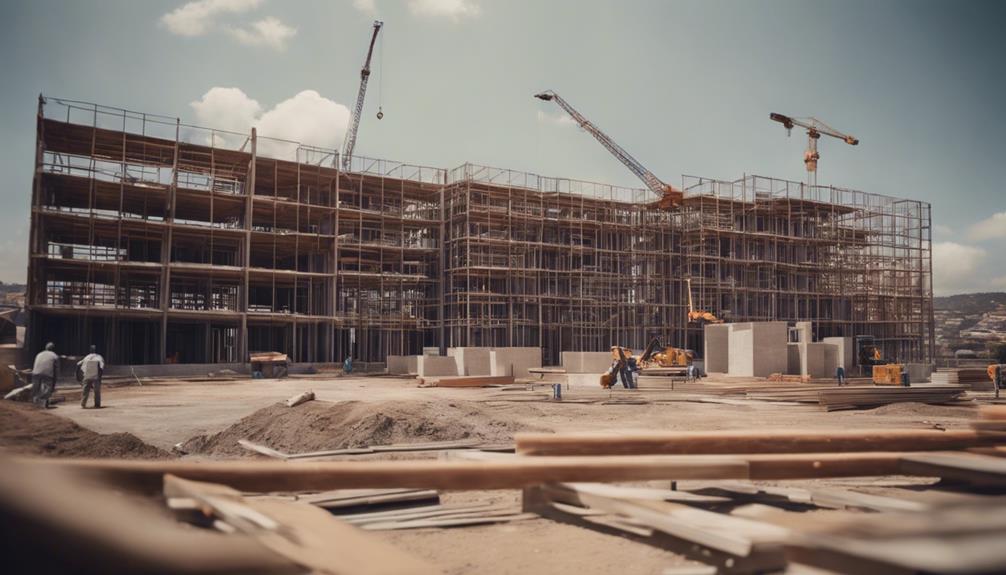
Innovations in construction techniques, such as prefabricated cavity wall systems, are revolutionizing low-cost housing projects in South Africa. These advancements improve material efficiency and accelerate assembly processes, allowing for customizable designs and enabling rapid construction with complete amenities in as little as two days.
Improved Material Efficiency
Improved Material Efficiency
Efficient material utilisation in low-cost housing projects in South Africa is being revolutionised through the adoption of innovative construction techniques, notably prefabrication and modular systems. These advancements allow for faster construction timelines and reduced waste, contributing to cost savings and sustainable building practices.
Key features enhancing material efficiency and flexibility include prefabricated cavity wall systems and customisable designs. Rapid construction techniques, like completing amenities in just two days, demonstrate the efficiency gains achieved through modern construction methods. Structural features address adverse soil conditions and maximise flexibility in modular house design to further optimise material usage in low-cost housing projects.
- Prefabricated cavity wall systems enhance efficiency
- Customisable designs improve flexibility
- Rapid construction techniques reduce waste
Faster Assembly Methods
The evolution towards faster assembly methods in low-cost housing projects in South Africa is exemplified by the implementation of innovative construction techniques that streamline the construction process and enhance efficiency.
Prefabricated cavity wall systems in Cape Town enable rapid construction with complete amenities installed within two days, showcasing the shift towards quick and quality housing solutions.
Customisable designs in low-cost housing projects allow for adaptability to prefabricated kits, enhancing flexibility and efficiency in construction.
Innovative structural features address adverse soil conditions, ensuring stability and durability, contributing to the accelerated assembly of housing units.
The utilisation of fast assembly methods reflects a commitment to efficient, quality construction practices to meet the growing housing demands in South Africa.
Sustainability Trends in Housing Development
Sustainable housing development in South Africa is increasingly integrating eco-friendly materials and renewable energy solutions to enhance environmental efficiency and community resilience. The shift towards sustainability in housing projects is evident through various trends:
- Utilisation of Environmentally Friendly Materials: Housing initiatives are embracing materials like recycled steel and other sustainable resources to reduce environmental impact.
- Incorporation of Renewable Energy Sources: The integration of solar panels and rainwater harvesting systems in low-cost housing projects is becoming more common to promote energy efficiency.
- Adoption of Green Building Practices: Green building techniques such as passive design strategies and efficient insulation are being employed to minimise energy consumption and enhance eco-friendliness.
These trends signify a concerted effort to create eco-friendly communities with sustainable infrastructure, green spaces, and communal gardens. By prioritising sustainability, housing development in South Africa aims to enhance living conditions, decrease carbon footprint, and ensure long-term cost savings for residents.
Community Integration in Affordable Housing

Affordable housing initiatives in South Africa are strategically emphasizing community integration to foster social cohesion and inclusivity.
By promoting mixed-income neighborhoods and incorporating shared public spaces, these projects aim to reduce segregation and enhance interaction among residents.
Implementing inclusive design principles and valuing community participation are key strategies to create a sense of belonging and ensure that diverse needs are met within low-cost housing developments.
Social Cohesion Benefits
Within the realm of low-cost housing initiatives in South Africa, the integration of diverse communities stands as a cornerstone for fostering social cohesion and community synergy. Affordable housing projects in the country play a vital role in breaking down social barriers and promoting inclusivity by creating opportunities for residents to interact and collaborate.
The social cohesion benefits of community integration in affordable housing include:
- Shared amenities that promote interaction and a sense of community.
- Communal spaces that encourage social gatherings and relationships.
- Collective activities that foster mutual support and a feeling of belonging within neighbourhoods.
Through these initiatives, affordable housing developments in South Africa aim to create cohesive and inclusive communities where residents can thrive together.
Inclusive Neighborhood Planning
The integration of diverse communities through inclusive neighbourhood planning in affordable housing initiatives in South Africa is crucial for fostering social cohesion and reducing segregation.
By creating mixed-income neighbourhoods through strategies such as incorporating various housing types, amenities, and services accessible to all residents, inclusive neighbourhood planning aims to promote a sense of belonging and equity within low-cost housing developments.
Community participation and stakeholder engagement play vital roles in ensuring that the needs and preferences of residents are considered in the planning process. This approach not only enhances the quality of housing provided through programmes like the Reconstruction and Development Programme (RDP) and housing subsidies but also contributes to building stronger, more inclusive communities that benefit from improved social cohesion.
Shared Public Spaces
Community integration in low-cost housing developments is significantly enhanced through the strategic design and implementation of shared public spaces.
Public spaces such as parks, playgrounds, and community centres play a crucial role in fostering social interaction and a sense of belonging among residents in affordable housing projects. These shared spaces not only provide recreational opportunities but also serve as venues for community events and gatherings, strengthening the bonds within the neighbourhood.
Additionally, amenities such as community gardens and sports facilities contribute to improving the overall quality of life for individuals living in low-cost housing. By promoting shared public spaces, affordable housing developments can create vibrant and cohesive communities where residents feel connected and supported.
Future Prospects for Low-Cost Housing
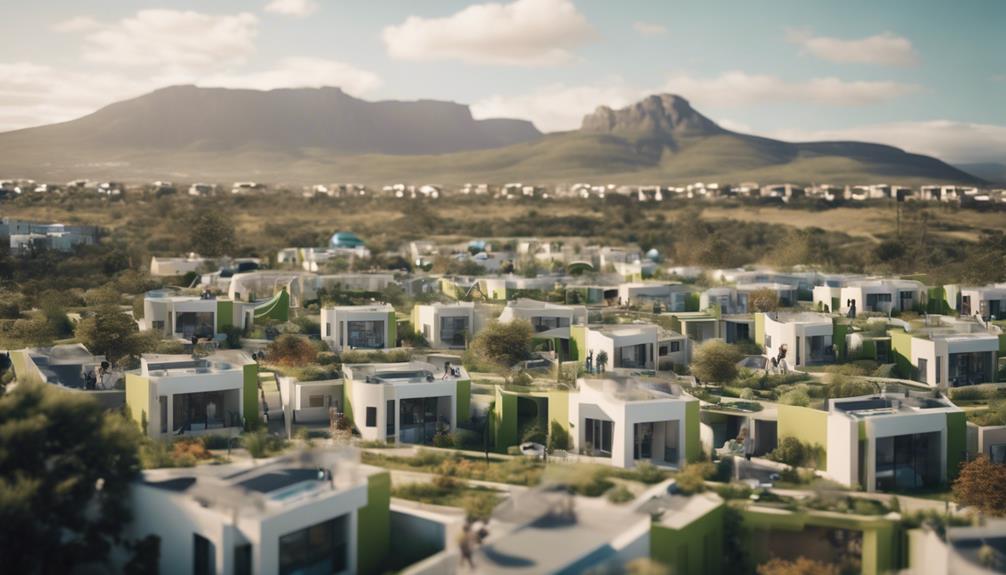
Amidst the evolving landscape of low-cost housing in South Africa, the integration of fast delivery steel structural elements is revolutionising the construction process, paving the way for efficient and affordable housing solutions. Future prospects for low-cost housing in South Africa are promising, with increased government support through subsidies and policy initiatives.
The utilisation of prefabricated systems in low-cost housing projects balances quality and speed, addressing housing needs efficiently. Urbanisation trends in South Africa are propelling innovation in the construction sector, emphasising the importance of rapid and cost-effective housing solutions. Significant opportunities exist for advancing affordable housing projects to meet the growing demand across the country.
Conclusion
In conclusion, the way we build cheap homes in South Africa is changing because of money problems, new rules, cool building ideas, caring about our planet, and bringing communities together. It's like we're building a giant puzzle, and every piece needs to fit perfectly to create a picture of homes where everyone can live happily and affordably.
Imagine a future where everyone has a cosy place to call home, thanks to people working together – the government, businesses, and neighbours. It's a dream that can come true if we all put our heads and hearts into it.
If you're wondering how you can be a part of this big change or need some guidance, don't hesitate to reach out to JB Property Group. They're like the guides in this adventure of creating homes where laughter and dreams live. Let's work together to make the dream of affordable, lovely homes a reality for everyone.